
No Lipscomb County 72-Hour Release Archive
The Lipscomb County Sheriff page publishes its jail telephone and fax numbers and sends custody-status users to VINELink. It does not provide a live roster, a recent-release control, a three-day archive, or a sheriff app. No official source supports claims about a 72-hour feed's fields, photographs, refresh cadence, or retention.
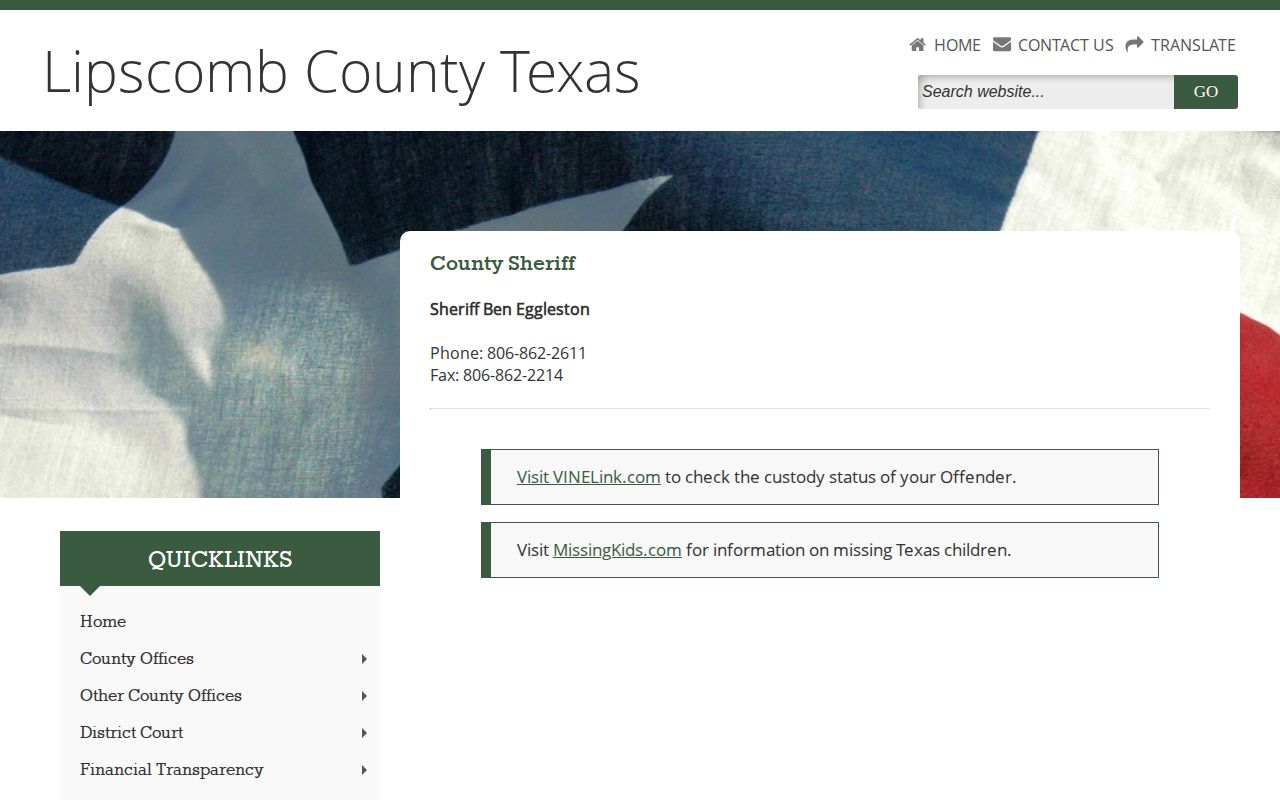
The page establishes the county's real access route: a person-specific status check followed by confirmation from the sheriff, not a browseable list of everyone released over three days.
A 72-hour window is a request interval, not an existing web feed. Specify both timestamps and ask for recorded release events within them. Do not stretch a current VINELink result into a historical county archive.
How to Check Lipscomb County Weekend Releases
The longer window is useful when a same-day check occurred after an office closed, when a weekend crossed the calendar boundary, or when the person-specific status service did not supply enough detail. Work from the custody episode outward rather than assuming disappearance means release.
- Set a precise beginning and ending date and time spanning the three days of interest. Write down the local time zone used for the request.
- Search the exact person through the current Texas IVSS portal or the VINELink path named by the sheriff. Read the source agency, status wording, location, and event date as displayed.
- Call the Lipscomb County Sheriff's Office at 806-862-2611. Ask whether the person remains there and, if not, whether the recorded movement was community release or transfer.
- Request existing release-log or release-event records for the defined interval. Ask for an electronic export with protected data redacted rather than withholding an otherwise public record in full where law allows.
- If the record identifies a cause number, request the docket and signed order from the combined County and District Clerk. If it names a receiving agency, continue the custody check with that agency.
Use the 24-Hour Release List guide when only a same-day interval is needed. For a particular person's complete route across jail, state, or federal systems, start with the Lipscomb County release search.
What a Lipscomb 72-Hour Release Request Should Show
No online table currently displays these data. They are the fields to identify in a focused request for an existing jail-system export. Supplying names, booking identifiers, and a bounded date range helps the custodian locate responsive material without being asked to conduct research or create a narrative.
| Field | Use in a three-day review |
|---|---|
| Name and booking number | Matches the right person to the right custody episode. |
| Booking date/time | Separates a recent episode from an older arrest or similarly named person. |
| Recorded release date/time | Places the event inside or outside the requested 72-hour boundary. |
| Release type or code | Identifies bond, court order, sentence discharge, or another recorded basis. |
| Cause number | Provides the link to the clerk's legal case record. |
| Destination/receiving agency | Distinguishes community release from continuing custody. |
| Authorized release order | Shows the legal authority used during processing. |
| Property receipt | Documents return of property or a witnessed refusal. |
Ask for release date and time as separate labeled values if that is how the jail system stores them. Preserve the original field labels. “Release,” “transfer,” “discharge,” and “out of custody” should not be treated as interchangeable without the source's definition and destination.
Weekend and Holiday Release Verification
Lipscomb publishes no weekend release schedule and no promise about automated-event timing. A status alert depends on information sent by a participating agency, while a telephone answer reflects what staff can confirm at the time of the call. Administrative timing can therefore differ from the physical departure time recorded in the release file.
When a weekend straddles two dates, avoid phrases such as “released Saturday” until the sheriff record provides the timestamp. Save the notification wording and retrieval time, then ask for the authorized release order and destination. A court order may have been signed before jail processing finished. Conversely, a person may leave the building through transfer while remaining continuously confined.
Texas jail standards require identity verification and an authorized order before release processing, as well as retention of the release order and time. The October 2025 inspection reviewed Lipscomb's Chapter 267 policy and sampled three inmate release files. That local evidence makes the written file the durable fallback even though no weekend report appears online.
Where a Released Person Appears After Three Days
A person released to the community from Lipscomb County Jail usually will not appear in a current-custody roster, and Lipscomb does not publish such a roster anyway. The sheriff's release file records the operational movement. The clerk's docket and signed judgment, bond order, dismissal, revocation, or discharge order provide the legal context. Those two sources answer different questions and should be reconciled by cause and booking number.
A transfer to TDCJ should eventually be checked in the TDCJ current-inmate database, allowing for entry lag. State parole or mandatory-supervision status belongs in IVSS and TDCJ Parole Division channels. A destination of another county, USMS, ICE, or another custodian requires confirmation there. Failure to find a person in one database never proves that every form of custody ended.
VINELink or IVSS can be the quickest alert layer. It is not the complete release instrument, and a no-result may reflect a spelling mismatch, agency participation, delay, or the system's record lifecycle. Call the source agency whenever the displayed status and the expected movement conflict.
Requesting the Lipscomb Three-Day Release Log
Address an operational jail-record request to the Lipscomb County Sheriff's Office, P.O. Box 120, Lipscomb, Texas 79056-0120. The office publishes phone 806-862-2611 and fax 806-862-2214, but no sheriff-specific request form, email address, fee, or public hours. Call to confirm the accepted written channel before submitting and keep proof of delivery.
A focused request can ask: “Under the Texas Public Information Act, please provide existing release-log or release-event records from [start timestamp] through [end timestamp], including name, booking number, booking time, exact release date/time, release type, cause number, and destination or receiving agency, with confidential fields redacted where permitted. Electronic records are preferred.” The agency need not create a record that does not exist, so ask for the native export or responsive existing documents.
Government Code Chapter 552 controls access and exceptions. Basic law-enforcement information can include notation of release or transfer and bonding information, but privacy, juvenile confidentiality, medical material, security provisions, court sealing, and expunction can restrict particular content. Lipscomb posts no special release-record tariff. Ask for a quote, especially when a broad interval or labor-intensive retrieval could cause charges.
Reading a 72-Hour Result Without Overstating It
Match four elements whenever available: the person's identifiers, the exact booking episode, the recorded movement, and the date and time. The legal “why” comes from the judicial order or sentence record. If one element is missing, identify that gap instead of inferring it from an old image, charge listing, or commercial roster.
A bond release is not a case dismissal. A dismissal is not proof of the precise jail exit time. A sentence can end while a separate detainer keeps the person in custody. A transfer is not community release. These distinctions are why the wider three-day search should end with source records rather than a claim based only on a vanished online result.
Public Record Search
Sponsored Results