
Parole vs Probation in Lipscomb County
Parole is a discretionary conditional release from a TDCJ sentence. Mandatory supervision is release to the TDCJ Parole Division under a statutory credit framework, subject to exclusions and Board review in applicable cases. Both leave the state sentence running in the community. Probation is court-ordered community supervision administered through a Community Supervision and Corrections Department. An unconditional sentence discharge is different from all three.
| Status | Authority and verification route |
|---|---|
| Parole | Texas Board of Pardons and Paroles decides; TDCJ Parole Division supervises. Check the person-specific TDCJ review record, IVSS, and Amarillo District Parole Office. |
| Mandatory supervision | Release under Texas statutory credit and review rules; TDCJ Parole Division supervises. Use TDCJ and IVSS labels exactly. |
| Probation/community supervision | A court imposes it and the 31st Judicial District CSCD administers it. Confirm through Adult Probation and the signed judgment or order. |
| Pretrial conditions | A bond or magistrate order can impose conditions before disposition. Obtain the bond/order from the clerk; do not call it probation. |
| Sentence discharge | The sentence or supervision term has ended. Confirm with the discharge record or signed court order, not an assumption based on a missing search result. |
Releasee and discharged person are not synonyms. A releasee on parole or mandatory supervision continues serving the sentence and reports under conditions. A discharge date marks completion of incarceration, parole, mandatory supervision, or community supervision as applicable.
How to Verify Lipscomb Post-Release Supervision
Start with the document terminology. A TDCJ number, release certificate, or Parole Review Information record points toward state parole channels. A county cause number and community-supervision judgment point toward the local court and CSCD. Do not route every released person to whichever office is geographically closest.
- Identify the custody episode and collect the full name, exact date of birth, TDCJ or SID number if available, and county cause number.
- For a current TDCJ prisoner, open the TDCJ detail and its Parole Review Information link. Read Parole Review Status, Last Parole Decision, and Next Parole Review Date as separate fields.
- Before a Board vote, call the Board status line at 844-512-0461 with the name, TDCJ number, and/or birth date. After a favorable vote, use the Parole Division release-status line at 512-406-5202.
- After physical release, use IVSS to check TDCJ parole or mandatory-supervision status and available status-change notices. The current-inmate search no longer locates a former prisoner once the search's current-custody scope ends.
- For court-ordered probation, contact the Lipscomb adult probation route and request the signed judgment, supervision order, revocation, modification, or discharge order from the combined County and District Clerk.
- If the words used by a caller and the documents conflict, rely on the signed order and the responsible agency's labeled status. Ask the office to route a legitimate inquiry when public disclosure limits apply.
Which Regional Office Serves Lipscomb Releases?
Research Section 19's local distinction is crucial: neither post-release office is located at Lipscomb County Jail. TDCJ's county cross-reference maps Lipscomb County parole and mandatory supervision to Amarillo District Parole Office, Region V.
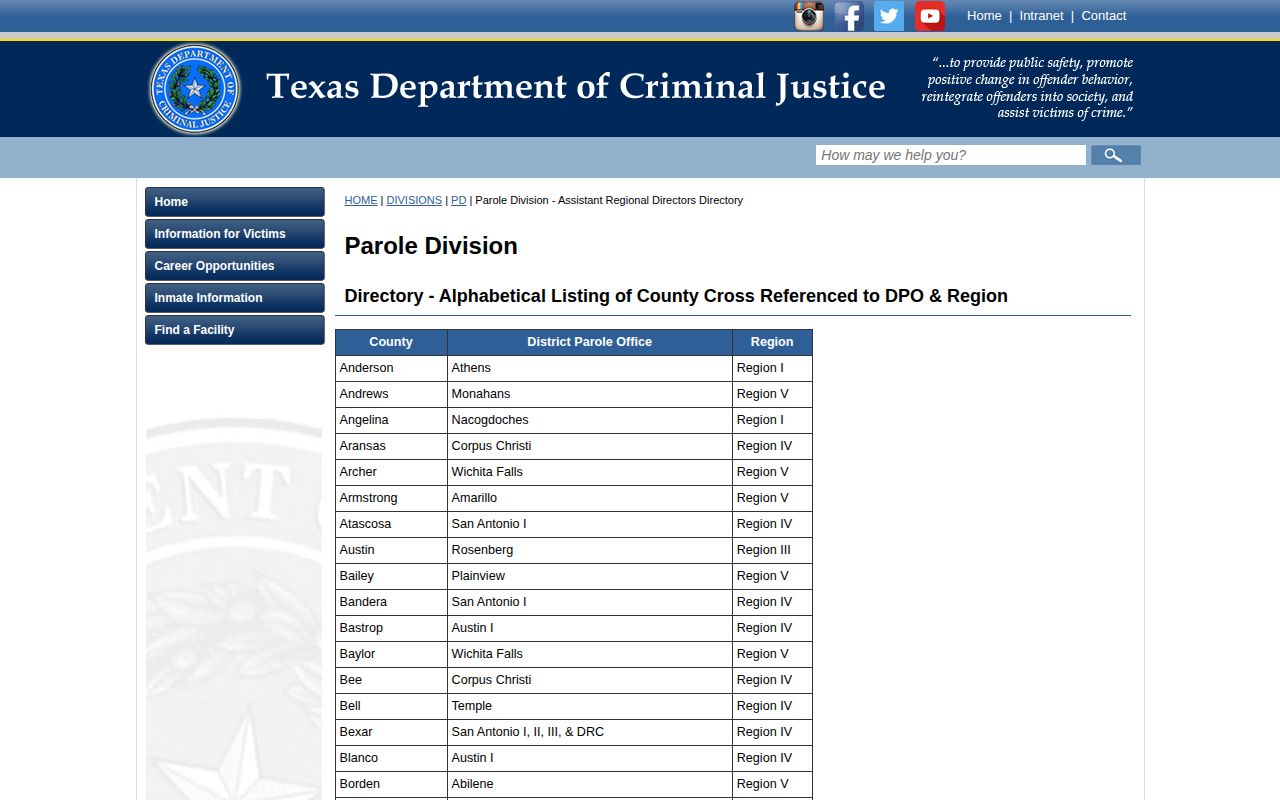
The mapping determines the parole route; it does not move court-ordered probation into TDCJ supervision.
Amarillo District Parole Office, Region V
5809 South Western Street, Suite 120
Amarillo, TX 79110
Phone: 806-355-9218
Fax: 806-353-9572
The official Region V directory provides the current Amarillo office details used for a legitimate parole or mandatory-supervision inquiry.
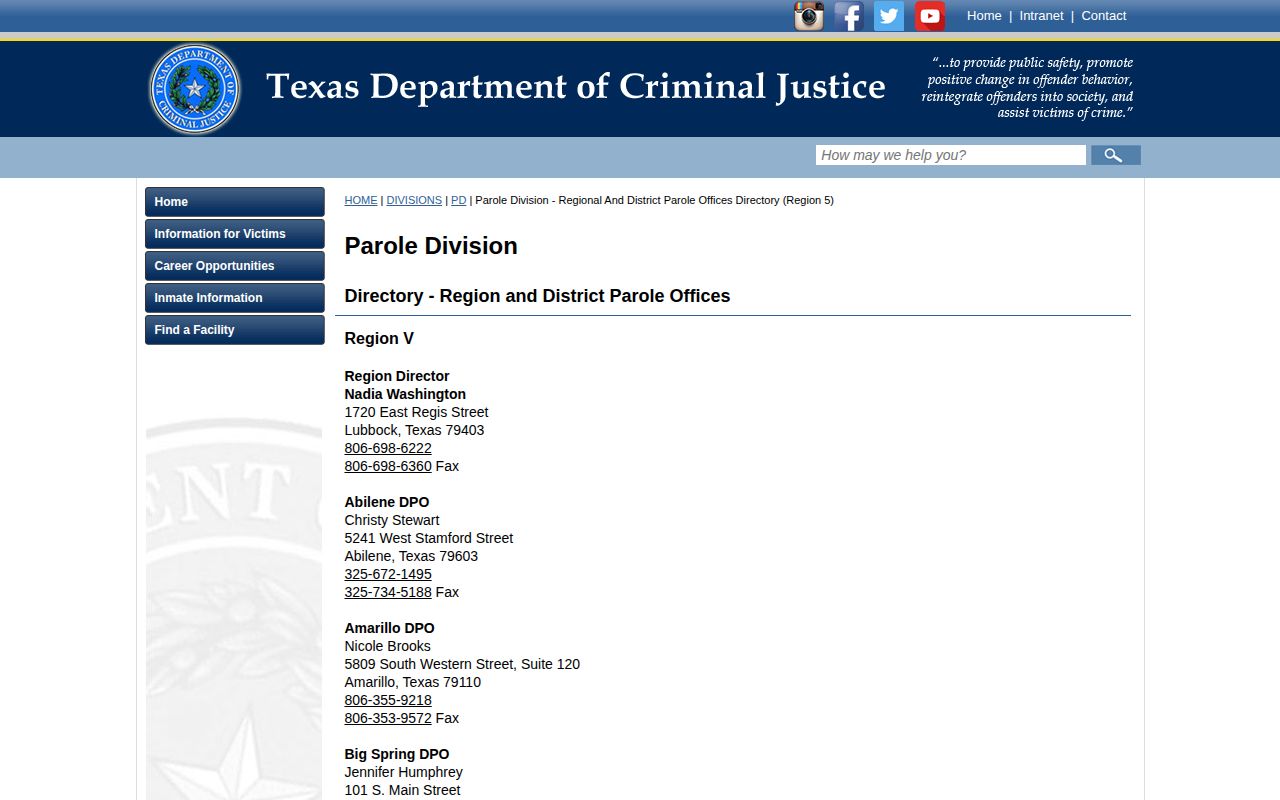
Agency rules still control which person-specific details are public, so the office contact is a routing source rather than a promise of unrestricted supervision information.
Lipscomb County Adult Probation
Angela Browning
P.O. Box 508
Wheeler, TX 79096
Phone: 806-826-5941
Fax: 806-826-5266
The official county Adult Probation page and TDCJ Community Justice Assistance Division directory place Lipscomb in the 31st Judicial District multi-county CSCD grouping. This Wheeler contact serves court-ordered adult community supervision. Juvenile supervision and juvenile records are different and commonly confidential.
Lipscomb Parole Review Is Not a Formal Hearing
The Texas Board of Pardons and Paroles says it does not conduct formal hearings for parole or mandatory-release consideration. Panel members review and vote files individually, so the Board's open-meeting notices are administrative meeting notices, not a calendar of person-by-person parole hearings. The closest person-specific schedule field is the Next Parole Review Date linked from a current inmate detail.
TDCJ identifies a file in advance of the review period, prepares a case summary, and sends it to the designated Board office. A three-member panel votes sequentially, and two matching votes finalize a result. The person-specific view may display review status, the last decision, and the next review date; the data are generated on working days and are at least 24 hours old.
Approval codes do not all mean immediate exit. FI-1 generally indicates release when eligible, FI-2 identifies a specified future month and year, and program-linked FI codes can require completion of a program. RMS concerns mandatory supervision. Denial codes can include NR with a later review period, SA in applicable cases, or DMS for denial of discretionary mandatory supervision. Eligibility and a favorable vote are milestones, not proof that release processing finished.
IVSS Checks After a Lipscomb State Release
The current Texas Integrated Victim Services System can report a TDCJ offender's parole or mandatory-supervision status and provide available status-change notices. The Lipscomb sheriff still directs county custody users to VINELink, while the statewide IVSS Counties layer launched in 2025. Live portal coverage must decide which Lipscomb county events are actually available; statewide rollout language alone does not prove that every local event is supplied.
Open the matching person record, compare identifiers, and preserve the source agency, exact status wording, event date, and location. A release notice means that the feeding agency recorded an exit from that custody status. It does not alone establish that another detainer did not take effect, that a case was dismissed, or that supervision ended. Confirm a TDCJ movement through Parole Division release processing and a county movement through the sheriff's release record.
TDCJ Victim Services assistance is available at 800-848-4284 or victim.svc@tdcj.texas.gov. Notification registration is confidential. Follow the current interface's confirmation steps rather than assuming that every modern account uses an older telephone PIN process.
Lipscomb Supervision Violations and Absconder Checks
Parole and probation conditions are set by the responsible authority and the person's order. A supervision violation can trigger review, a warrant, or revocation proceedings, but an allegation is not the same as a final revocation. Obtain the warrant or revocation record and read its current status rather than drawing a conclusion from an old alert.
TDCJ provides a Sex Offender Absconder Information Search for its limited subject area, and parole warrants are handled through Board and Parole Division processes. Research found no official Lipscomb County public probation-absconder or general warrant list. Failure to locate a name on a public list is not proof that no warrant exists. A registry or absconder match is an instruction to contact the responsible agency, not proof of present jail custody or the entire case outcome.
The Texas DPS Sex Offender Registry can remain public for the subset of released people who have a registration duty. It may help distinguish an identity and current registration information, but it does not establish the exact jail release time or general parole status. A no-result says nothing about whether a person was arrested, jailed, or released.
How Lipscomb County Supervision Ends
State parole or mandatory supervision ordinarily runs through the remaining sentence unless lawfully modified, revoked, or discharged. Court-ordered community supervision ends according to the court's judgment and later orders. A court may discharge someone from probation without any TDCJ prison release, just as a person may leave the county jail on bond without entering probation.
For parole or mandatory supervision, preserve the TDCJ discharge or release-processing record and any relevant Board history. For probation, request the signed judgment and discharge order from the combined County and District Clerk. The clerk lists public-information delivery by mail or email but offers no local criminal party-name search; its “Official Public Records” link concerns land records and should not be used as a criminal disposition search.
Operational and judicial records remain separate. The sheriff file establishes when someone physically left Lipscomb County Jail and may identify a destination. The clerk record explains the court action. TDCJ records establish state custody, review, release, supervision, and discharge labels. Reconcile names, cause numbers, booking numbers, and dates across those records through the Lipscomb County release-record path.
Texas Parole Eligibility Is Person-Specific
Texas Government Code Section 508.145 contains offense- and date-specific parole eligibility formulas. Sections 508.147 and 508.149 address mandatory supervision and exclusions. Eligibility is the first legal opportunity for consideration, not a release promise. Offense date, sentence structure, statutory exclusions, Board decisions, program requirements, detainers, and release processing can all affect the outcome.
Read the live TDCJ fields rather than making a hand calculation. Parole Eligibility Date, Next Parole Review Date, Projected Release Date, Scheduled Release Date, Maximum Sentence Date, and actual discharge describe different stages. The Projected Release Date guide explains those distinctions. The actual departure is confirmed by release processing, not by shortening an eligibility or review label to “release date.”
Public Record Search
Sponsored Results