
Lipscomb County VINELink Coverage
The Lipscomb County Sheriff refers custody checks to VINELink but does not publish a county roster. Texas also operates the Integrated Victim Services System, or IVSS. The state system covers TDCJ prison custody, parole, and mandatory supervision. IVSS Counties began as a bridge for participating county jail and court events. Research did not establish which Lipscomb County events appear in the live county feed, so the portal or sheriff must confirm current participation.
VINE means Victim Information and Notification Everyday. It is built to send status notices, not to serve as a full release file. A county event can describe release, transfer, bond, or another custody change. A TDCJ event may concern prison custody or post-release supervision. Federal Bureau of Prisons and ICE records are outside this county and state alert path. Those systems need their own locators.
The official sheriff page illustrates the local starting point. View the sheriff's VINELink referral before using the pictured page.
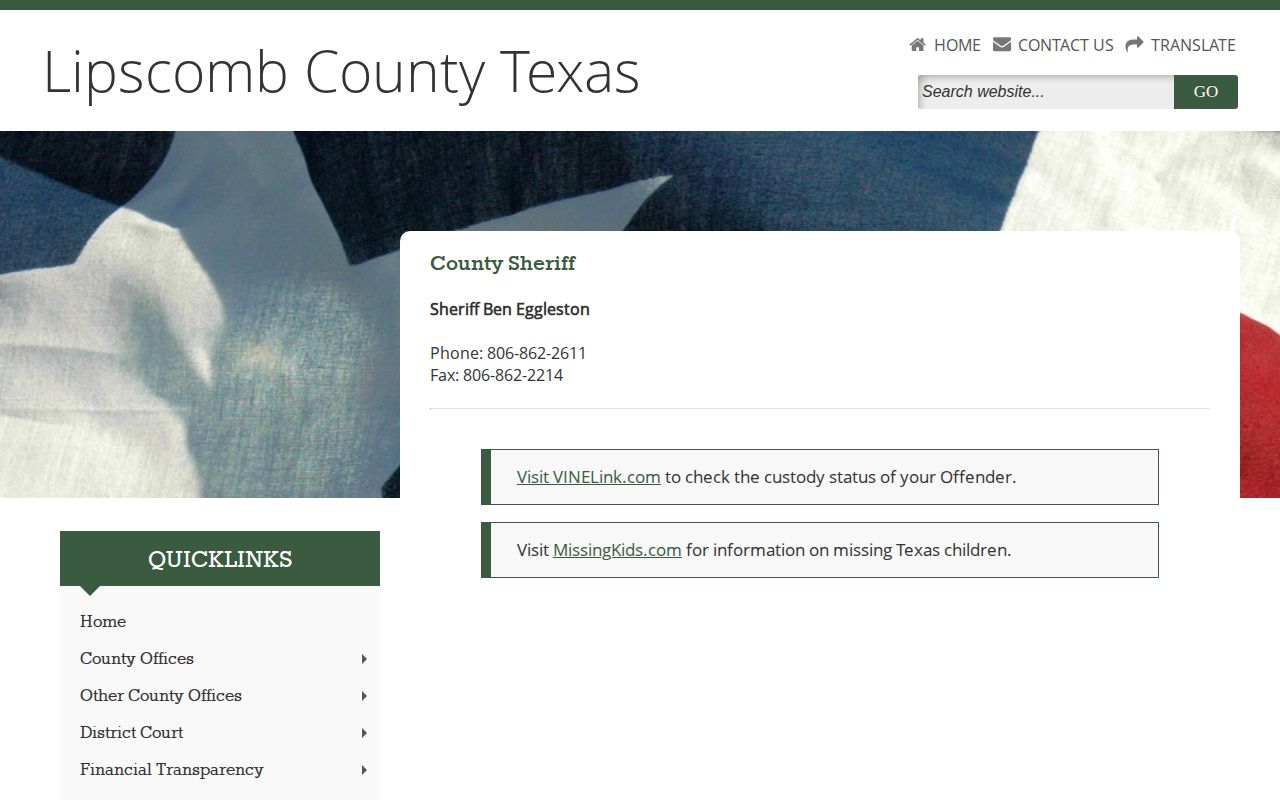
Its lack of a roster makes the person-specific alert route useful, but the sheriff remains the source for an exact release time and type.
Search Lipscomb County VINELink
Begin with the current Texas service or follow the sheriff's VINELink link and select Texas. Use an agency, jail, SID, or TDCJ number when the live form accepts one. An exact name is the fallback. Names alone can match more than one person, so compare every identifier before opening a record. The broader Lipscomb County released inmate search explains the records chain when one portal cannot resolve the event.
- Open IVSS or VINELink and choose the Texas search offered by the live interface.
- Enter the exact name or available identifying number. Do not guess at spelling or dates.
- Compare the source agency, ID, age or birth details, and location before selecting a match.
- Read the status and event wording as displayed. Save the retrieval date with the result.
- Call the feeding agency if the match is missing, late, or unclear.
A missing match does not prove release. Lipscomb may not feed that event, an identifier may differ, the update may lag, or the public record may have aged out. If a weekend movement is suspected, ask the jail whether it was bond, discharge, court-ordered release, or transfer. A transfer keeps the person in custody.
The national interface is shown in the successful manifest capture. Open VINELink's current search screen before reviewing the image.
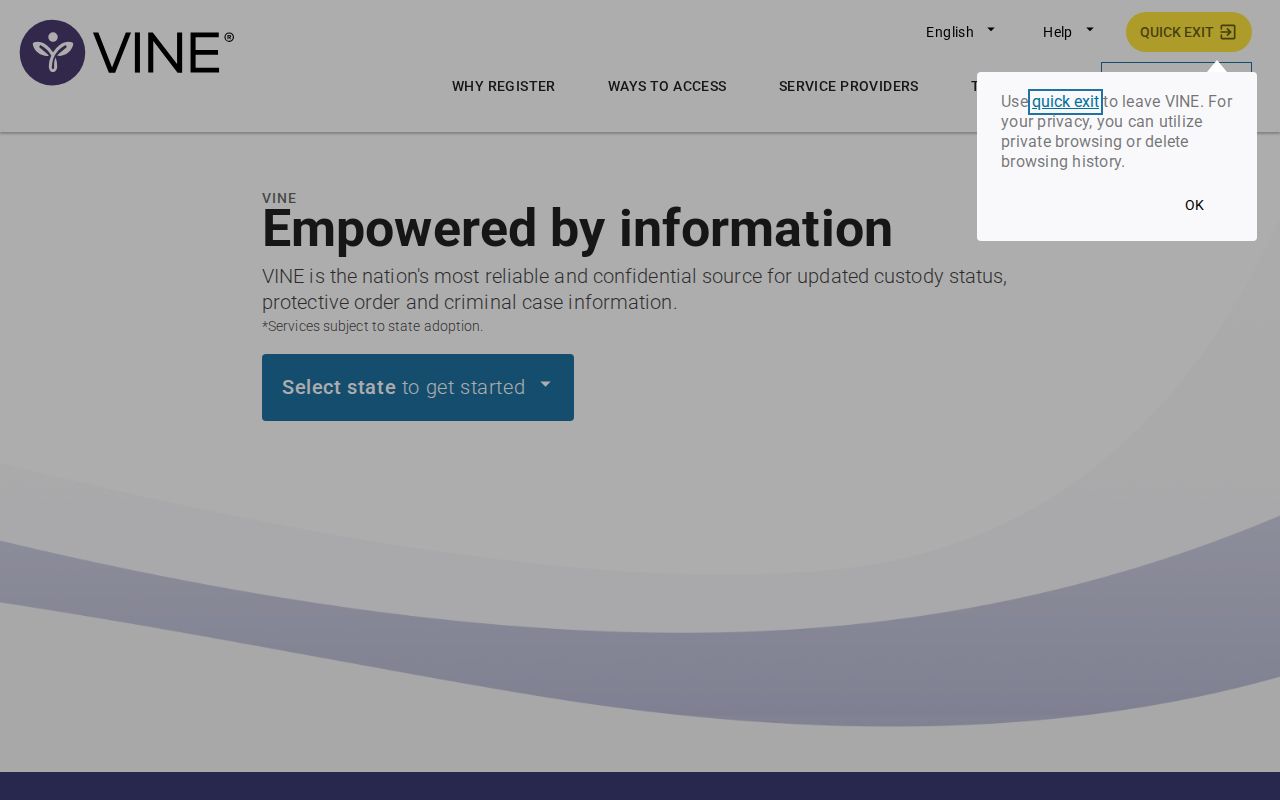
The live screen controls which fields and registration choices are available, so its prompts take priority over old instructions.
Lipscomb County Release Alert Fields
A useful event has at least four parts: the matched person, the custody episode, the movement, and the recorded time. The reason for release may come from a court order rather than VINE. Keep each field's label intact. “Out of custody” cannot be translated into dismissal, and “released” does not always mean unrestricted return to the community.
| Field | How to read it |
|---|---|
| Source agency | Identifies the jail, TDCJ unit, court, or other provider that sent the event. |
| Person or offender ID | Helps distinguish the correct person and custody episode from a same-name match. |
| Custody or supervision status | Uses the source's words for in custody, released, parole, mandatory supervision, or another state. |
| Event date | Shows when the source recorded the change; it may not equal the time an alert was received. |
| Location | Can identify a current unit, reporting office, or receiving agency rather than a home address. |
For Lipscomb County Jail, pair the alert with the sheriff's authorized release order and exact time. For TDCJ, pair it with Release Processing, the sentence record, and any Board decision. A favorable parole vote or projected date is supporting data, not the actual exit event.
Register Lipscomb County Release Alerts
Registration starts from the correct person record. The live service may offer phone, text, email, or an account notice. Enter contact details with care and retain the confirmation. Older VINE services often used a telephone PIN, but the reviewed material does not prove that every current IVSS Counties flow still does. Follow the screen actually shown.
- Select the notification or subscription control on the confirmed person record.
- Choose one or more contact methods offered for that agency and event.
- Complete the email, text, phone, account, or PIN confirmation required by the live system.
- Save the registration confirmation and update the contact information after any change.
- When an alert arrives, preserve its source, wording, date, and time before verifying it.
Registration information is confidential. Do not share a confirmation screen that exposes a phone number, email address, or PIN. Texas IVSS also offers TDCJ-specific search and registration. Review the current IVSS entry page before using the manifest image.
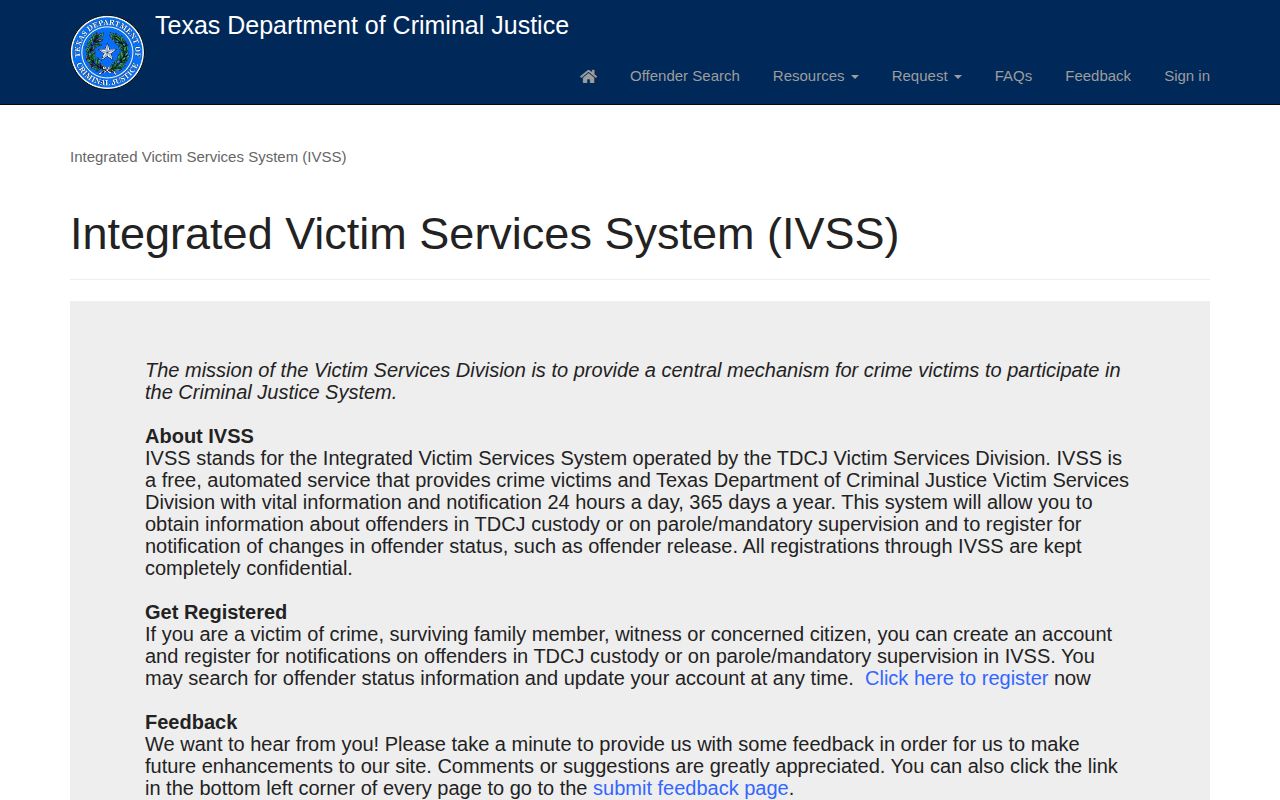
The state portal supports TDCJ events, while county event availability still needs a live Lipscomb check.
Lipscomb VINELink Meets IVSS
Lipscomb's local page still highlights VINELink. Meanwhile, the TDCJ annual review reports that IVSS Counties launched on September 1, 2025. The shift matters because county jail and court events may now flow into a system designed to continue notifications into state custody. It does not prove that every Lipscomb event or alert type is live.
Check the current county list and the exact event labels on the day of use. If Lipscomb is unavailable, phone the sheriff at 806-862-2611 and make a written request for the existing release entry. If an event appears, still ask which agency supplied it. That step separates a county discharge from a move to TDCJ or another custodian.
Important: A VINE or IVSS alert is the fastest notice layer, but the creator's record is the stronger proof of what happened.
Confirm Lipscomb County Release Events
Route the follow-up by custody type. For a county event, request the jail's release sheet, authorized order, release code, exact time, and destination. The combined County and District Clerk can supply the signed judgment or bond order that explains the case outcome. For a TDCJ event, use the offender search, IVSS, and Release Processing. The current-inmate database drops former prisoners, so absence there is not enough.
A federal BOP result uses the federal locator and may display “RELEASED” with a BOP-specific date. ICE has a separate locator whose recent-release coverage is limited. USMS has no comparable public former-detainee search. In each case, a local entry reading “released to” another agency means transfer, not release to the community.
- Release
- Exit from one agency's custody under a recorded authority.
- Discharge
- Completion of the custody or supervision obligation named in the record.
- Transfer
- Movement to another lawful custodian without a break in custody.
- Detainer
- A request by another agency to hold or receive the person.
Limit: Alerts can lag, omit an event, or use broad terms. Verify the source record before treating a notice as final.
Reconcile Lipscomb Release Alerts
Several common conflicts have a clear next step. If a person seems to vanish after a weekend, search IVSS or VINELink and then call the jail. Ask for the last movement, exact time, release authority, and destination. If the answer is bond, the clerk's cause-number file should hold the bond or release order. If the answer is transfer, continue with the named receiving agency.
A county note that someone was transferred to TDCJ is not community release. Allow for data-entry lag, then search TDCJ by SID or TDCJ number. Once the state detail appears, use its current unit and sentence fields. Later, projected release and parole fields may become relevant, but they describe state custody rather than the earlier Lipscomb booking.
If TDCJ showed a future date and the person is now absent, remember that its public database covers current prisoners. Call the release-status line, review IVSS, and seek the actual TDCJ release record. A scheduled date, Board vote, and disappearance can support a conclusion, but Release Processing distinguishes parole, mandatory supervision, discharge, transfer, and a detainer.
Supervision offices also differ. TDCJ parole and mandatory supervision route to the Amarillo District Parole Office. Court-ordered community supervision routes through the 31st Judicial District adult probation contact in Wheeler. The judgment and release certificate settle the terminology when family members hear only the broad word “probation.”
Save every alert with the source agency, exact wording, date, time, and retrieval date. Compare timestamps only after checking how each system displays time. A notification time can follow the actual event, and a projected date is not an event at all.
An alert that reads “release” can still mark exit from only one agency. If the sheriff records an ICE hold, use the ICE locator within its recent-release scope and retain the jail's destination entry. If BOP shows “RELEASED,” that confirms the person left BOP custody as of the displayed date within the locator's limits, but it does not rule out another jurisdiction. A federal docket supplies the legal outcome.
Accuracy also depends on custody episode. Keep the booking, TDCJ, or BOP number and relevant date with every saved result. When two sources conflict, do not choose the one that seems most favorable. Ask each creator what its field means, then obtain the order or release instrument that links the event to the correct person.
Old images and arrest entries require the same care. A photo still online after a case changed does not disprove release. Obtain the final clerk disposition, ask the sheriff to confirm or correct its source record, and use a certified expunction or nondisclosure order through the proper dispute process when one exists.
A well-framed written request names the person, booking or agency number, approximate custody date, and event being checked. Ask for the existing release sheet, authorized order, time, code, and destination. If one field is unavailable, mark that gap. This keeps the final account tied to records instead of a broad alert label.
Public Record Search
Sponsored Results